
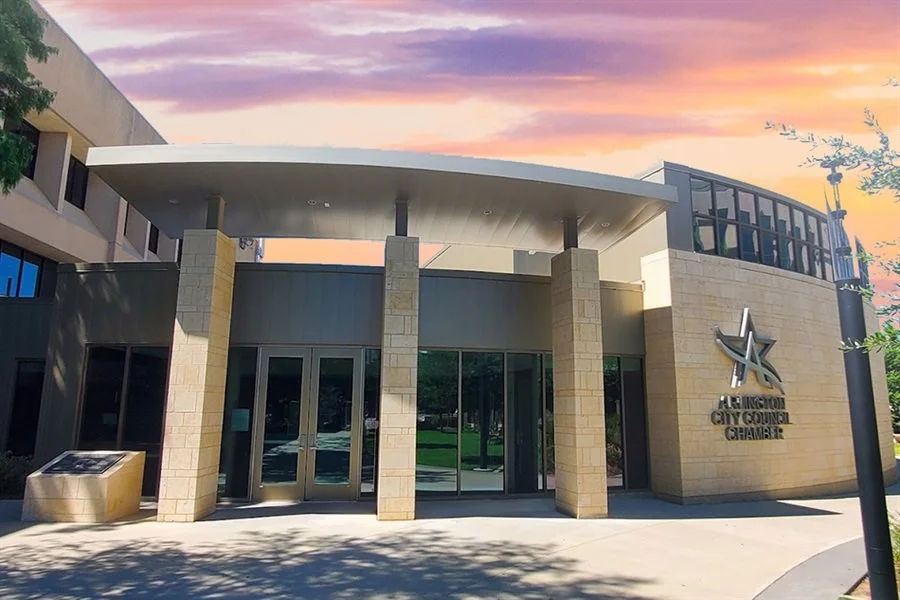
In September, Arlington suspended its anti-discrimination ordinance based on a mistake.
Suspending the ordinance resulted in discrimination no longer being illegal under the city code.
In Feburary, The Council adopted a new do-nothing ordinance that permanently deletes the language that made discrimination illegal in city code and prevents enforcement of discrimination complaints.
The city was misled by claims that keeping these protections would cost Arlington $65 million in federal grants. These claims were wrong, and the city couldn't produce any documentation to verify the claims.
Of the more than 1,000 cities receiving the same HUD funding, only Arlington abandoned local civil rights protections.
Tell Arlington City Council you object to this “say a lot, do-nothing ordinance.” This ordinance compromises civil rights, compromises accountability, and compromises Arlington's moral responsibility to keep residents safe.
Arlington deserves better.

The Human Rights Campaign Condemns City Council’s Vote
The Human Rights Campaign — the nation’s largest LGBTQ+ civil rights organization — put out a statement condemning the vote, calling it “a substantive rollback of legal protections and an egregious step in the wrong direction.” HRC also confirmed that it will significantly lower Arlington’s previously perfect score of 100 on the Municipal Equality Index, a score that the mayor and the city council have repeatedly touted as an example of how pro-LGBTQ+ Arlington is, despite the council’s actions. The Municipal Equality Index is widely recognized as an authoritative barometer that many corporate entities utilize to determine when and where to direct investments across the country. This is a major development, indicating that the city council’s actions are putting Arlington on the national stage for all the wrong reasons, which could create lasting and damaging reputational harm.
STATEMENT FROM HRC (February 26, 2026):
Local governments must continue to lead on civil rights, not retreat
By Chauncey Graham
Legislative Counsel, HRC
This week, the City of Arlington, TX voted to replace its comprehensive non-discrimination ordinance with a generic policy framework that not only rolls back protections on the basis of sexual orientation, gender identity, and race, but goes so far as to preclude the City from even investigating discrimination complaints.
This should alarm anyone who values civil rights and responsible governance. My own work is focused on ensuring cities across the country enact municipal laws, policies, and services that are inclusive of LGBTQ+ people who live and work there. Each year, I help put together Human Rights Campaign's Municipal Equality Index (MEI), which, for 14 years, has rated cities on these metrics from across the country. Having worked extensively in this space I can say that far from just an update to the Code, this news out of Arlington is a substantive rollback of legal protections and an egregious step in the wrong direction.
Civil rights protections matter. Not only in principle, but in practice.
Explicit and comprehensive non-discrimination ordinances provide guidance for employers, businesses, landlords, and residents. They establish enforceable standards and send a clear message: discrimination will not be tolerated.
In addition to weakening accountability, removing these protections creates uncertainty, signals retreat, and puts historically marginalized groups at risk of further harm, exacerbating the effects of discrimination in employment, housing, and public accommodations. Earlier this month the HRC Foundation released the 2026 State of the Workplace Report, which said that more than half of workers whose employers had reduced, rebranded, or eliminated DEI practices reported experiencing discriminatory behavior in that workplace.
Moreover, a generic policy that merely states nondiscrimination objectives but does nothing to meet those objectives (like refusing to investigate complaints or provide for any mechanism of enforcement) quite literally fails at its core mission of furthering civil rights.
Beyond the civil rights implications, this is also an economic and governance issue. Inclusive, nondiscriminatory environments correlate with stronger workforce attraction and retention. Major employers increasingly evaluate local civil rights frameworks as part of site selection and talent strategy. In competitive regional markets, civil rights infrastructure is how cities distinguish themselves as a part of larger risk management and economic competitiveness strategies.
At a moment when federal and state actions are actively targeting hard-won advances and limiting efforts at diversity, equity, and inclusion, local governments should be strengthening local protections, not dismantling them. Cities often serve as the last meaningful line of defense for safe, healthy, and inclusive communities.
In the 2025 MEI report published last fall, Arlington earned a 100-point rating. That rating included credit for the now-rescinded ordinance. It is also likely that other City policies and practices impacting LGBTQ+ equality will be affected. Without a doubt, this will result in a significantly lower score when the 2026 MEI is published this fall. But this is about more than just a number. It's about real people who will feel less safe, less welcome, and less protected in their community.
Progress in 2026 requires expanding access, prioritizing inclusion, and protecting the most vulnerable among us. And, at the very least, that can’t include the regressive action of undoing civil rights laws already in place.
What does the do-nothing ordinance say?
WHEREAS, on September 9, 2025, the City Council approved Ordinance No. 25-068, temporarily suspending the application and enforcement of the “AntiDiscrimination” Chapter of the Code of the City of Arlington, Texas, 1987; and
WHEREAS, the City of Arlington stands steadfast in its commitment to the rights of every individual to work and earn wages through gainful employment, to obtain and enjoy goods and services, facilities and accommodations in places of public accommodation, and to obtain housing: in short, to strive to make the City a place where every citizen can achieve the American dream; and
WHEREAS, the protection of such rights has been enshrined into law at the federal and state levels; and
WHEREAS, those federal and state laws include, but are not limited to, the Civil Rights Acts of 1957, 1964 and 1967, the Equal Pay Act of 1963, the Age Discrimination in Employment Act of 1967, the Rehabilitation Act of 1973, the Age Discrimination Act of 1975, the Pregnancy Discrimination Act of 1978, the Texas Commission on Human Rights Act, the Americans with Disabilities Act of 1990, the Civil Rights Act of 1991, and the Pregnant Workers Fairness Act; and
WHEREAS, the City of Arlington seeks to educate residents regarding their rights under such laws; NOW THEREFORE
BE IT ORDAINED BY THE CITY COUNCIL OF THE CITY OF ARLINGTON, TEXAS: 1. That Ordinance No. 25-068, approved by City Council on September 9, 2025, is hereby rescinded.
Why does this matter?
This ordinance says a lot but does nothing to protect the civil rights of Arlington residents, enshrined into law at the federal and state levels. It merely seeks to educate residents regarding their rights under such laws rather than requiring the city to protect our rights. This impacts everyone. Discrimination based on race, gender, religious beliefs, sexual orientation, and all other protected classes now just receives lip service from the city of Arlington and leaves residents on their own when faced with discrimination.
Take action
Facts matter — but action does too. Here’s how you can help keep Arlington fair, accurate, and accountable
The Question Isn’t If Discrimination Is Wrong — It’s whether Arlington will keep the law that says so.
The only question is whether our city will continue to protect everyone. We can protect people and funding. We can be accurate and fair. That’s the Arlington we believe in.
Share This Site


